

Nvidia has positioned itself at the epicenter of the artificial intelligence revolution. From supplying the GPUs that train large language models to becoming a critical enabler of autonomous vehicles, generative AI, and cloud infrastructure, Nvidia’s influence has been unmatched. CEO Jensen Huang’s “AI Factory” metaphor captured both investor imagination and enterprise ambitions, portraying Nvidia hardware as the central nervous system powering next-generation digital infrastructure.
While the narrative resonated with Wall Street and tech giants, a wave of scrutiny is beginning to challenge its long-term sustainability. The spotlight is now shifting from model training to inference – the downstream deployment of AI applications at scale. And in this phase, the economics look significantly different. Rivals, software optimizations, and a hard push for cost efficiency are beginning to erode Nvidia’s 70%+ margin dominance, challenging the once-infallible AI Factory thesis.
The AI Factory Concept and Its Market Appeal
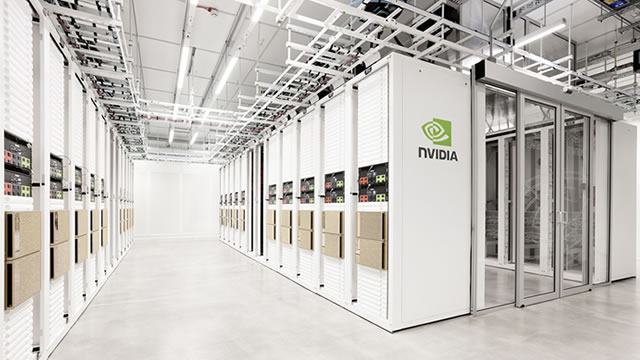
Nvidia’s AI Factory vision describes data centers designed explicitly for AI workloads. These centers use thousands of interconnected GPUs – primarily the H100 and A100 chips – to train and deploy neural networks across industries. Unlike traditional computing, which requires general-purpose CPUs, AI factories demand massive parallel processing power, making Nvidia’s hardware indispensable.
Enterprises embraced this model as it promised exponential data insights, automation capabilities, and monetization potential. As generative AI boomed in 2023–2024, AI factories were seen as modern-day oil rigs – extracting value from raw digital data.
For Nvidia, the AI Factory narrative served a dual purpose: marketing its high-end chips as essential infrastructure and defending its sky-high product pricing. By creating perceived exclusivity around AI compute, Nvidia justified its premium margins and attracted record-level demand from hyperscalers and sovereign AI initiatives.
Training vs Inference: The Crucial Shift in Workload Priorities
The initial wave of generative AI investments emphasized model training. Massive foundation models like OpenAI’s GPT-4, Google’s Gemini, and Anthropic’s Claude were trained on Nvidia GPUs. These training runs spanned weeks and required tens of thousands of GPUs – providing Nvidia with lump-sum revenue from large-scale hardware purchases.
However, once models are trained, the next step is inference – the real-time execution of these models to produce outputs. Unlike training, which is computationally intensive and infrequent, inference is persistent, cost-sensitive, and must scale horizontally across millions of users and applications.
This shift has exposed a fundamental truth: training is a one-time capital expense, while inference is a recurring operational cost. Enterprises and startups are now focused on minimizing inference costs while maintaining performance. This pivot is destabilizing Nvidia’s dominance, as lower-cost alternatives, custom silicon, and software-level efficiencies become increasingly attractive.
Economic Pressures Prompt Shift to Inference Optimization
The financial logic behind AI inference differs from training. While companies are willing to invest heavily in training foundational models, the economics of productizing these models hinge on low-cost inference. Whether serving chatbot responses, real-time voice synthesis, or autonomous vehicle perception, inference must be fast, scalable, and affordable.
In response, hyperscalers such as Amazon, Google, and Microsoft are investing in custom AI chips designed specifically for inference workloads. Amazon’s Inferentia, Google’s TPUv5, and Microsoft’s Maia chips are tailored to deliver high throughput at reduced energy and operational costs.
These alternatives not only circumvent Nvidia’s hardware dependency but also reduce long-term cost liabilities. Inference optimization efforts now span software compilers (like TensorRT and ONNX), model quantization, and sparse matrix techniques, all aimed at reducing GPU demand. As a result, Nvidia’s 70%+ gross margins are under pressure in the inference landscape, where cost-efficiency is paramount.

Competitive Headwinds from Custom Silicon and Open Source
Nvidia’s strength lies in its CUDA software ecosystem, which binds developers and enterprises to its GPU hardware. However, competitors are increasingly attacking this moat from multiple fronts. Custom silicon, designed for specific AI workloads, is narrowing the performance-per-dollar gap.
Apple’s Neural Engine, Amazon’s Inferentia, and Google’s TPUs offer compelling price-performance ratios for inference workloads, especially when coupled with cloud-native deployment strategies. These chips are often more power-efficient, reducing cooling and energy costs – key variables in hyperscale inference.
Moreover, open-source AI models and inference runtimes are accelerating hardware agnosticism. Projects like ONNX Runtime, TensorFlow Lite, and Hugging Face’s Optimum allow developers to abstract away from proprietary GPU dependencies. Once models can be efficiently executed across diverse hardware architectures, Nvidia’s grip on inference weakens.
Margins in Decline: Financial Implications for Nvidia
Nvidia’s datacenter revenue – primarily from AI – has ballooned over the past 24 months. Gross margins in the segment have hovered near or above 70%, buoyed by strong demand, limited competition, and the high ASP (average selling price) of the H100 GPUs. However, recent earnings calls and market analyses suggest this margin may not hold.
Customers are pushing back on Nvidia’s pricing. AI-native startups running inference at scale are acutely aware of GPU costs, especially when margins are thin and venture capital becomes scarce. Enterprises with large-scale inference needs are optimizing toward total cost of ownership (TCO), leading to a diversified hardware strategy.
AI Inference Wars Spark a Platform-Level Battle
Inference is now the battleground where the next phase of AI leadership will be decided. Companies are no longer competing solely on who trains the biggest model, but on who can serve the smartest models most efficiently.
This reality has intensified the platform war across cloud providers, chipmakers, and AI infrastructure startups. Nvidia, while dominant in training, must now defend its position in an arena where cost, latency, and efficiency override raw performance.
Software-Level Innovations Drive Hardware Substitution
Software innovations are enabling more efficient use of existing GPUs, undermining the need to continually upgrade to Nvidia’s latest chips. Model quantization, pruning, and distillation allow developers to shrink AI models without sacrificing accuracy. This reduces GPU memory footprint and speeds up inference, allowing broader deployment across mid-range or older GPUs.
Frameworks like NVIDIA TensorRT, Microsoft Olive, and Apache TVM are at the forefront of such innovations. While Nvidia benefits from TensorRT adoption, cross-platform frameworks increasingly support ARM, x86, and custom accelerators – diminishing the lock-in effect of CUDA.

Sovereign AI and National Alternatives Alter Market Dynamics
Asia, and the Middle East are reshaping demand for AI infrastructure. While Nvidia remains a supplier of choice for training, inference in sovereign contexts is often handled by local hardware vendors or hybrid compute solutions due to security, privacy, and cost concerns.
China, in particular, is rapidly scaling its domestic AI accelerator ecosystem to reduce dependency on U.S.-based firms. Firms like Huawei (Ascend), Alibaba (Hanguang), and Biren are developing chips tailored to local AI needs. Export controls on Nvidia’s high-end GPUs have further accelerated this pivot.
Similarly, countries such as France, Saudi Arabia, and India are launching sovereign AI efforts with varying levels of reliance on Nvidia. While initial infrastructure may be Nvidia-powered, long-term inference deployments are being architected with modular, cost-optimized stacks – many of which lean on open standards and local alternatives.
Strategic Responses from Nvidia to Preserve Dominance
Nvidia is not standing idle amid these challenges. It is aggressively expanding its software ecosystem, investing in AI-as-a-service offerings, and enabling GPU virtualization through cloud-native platforms. Nvidia NIM (Nvidia Inference Microservices) offers pre-packaged inference endpoints optimized for real-time workloads, seeking to defend Nvidia’s position in the inference stack.
Additionally, Nvidia is advancing its Grace Hopper Superchip – combining CPU and GPU capabilities – to reduce data movement bottlenecks and improve inference throughput. This hybrid architecture aims to address the latency and power concerns raised in inference-heavy environments.
Partnerships with enterprises and sovereign AI projects are also deepening. Nvidia is positioning itself as not just a chip supplier but a full-stack AI partner – from silicon to model deployment. These moves indicate a pivot to solution-centric narratives rather than hardware-centric ones, adapting to a changing AI compute landscape.
FAQS
What is Nvidia’s AI Factory concept?
Nvidia’s AI Factory refers to large-scale data centers built around Nvidia GPUs, designed for training and deploying AI models. These facilities centralize AI computing power, drawing parallels to traditional manufacturing factories for data processing.
Why is AI inference more challenging for Nvidia than training?
Inference is cost-sensitive, recurring, and must scale efficiently. Unlike training, where one-time GPU investments are made, inference demands continuous operation, encouraging businesses to seek lower-cost alternatives or optimizations.
How are Nvidia’s competitors gaining ground in AI inference?
Rivals like Google, Amazon, and Microsoft are deploying custom chips that offer efficient, lower-cost inference. Additionally, software tools and open-source ecosystems allow developers to reduce reliance on Nvidia hardware.
Are Nvidia’s 70% gross margins sustainable in the inference era?
Margins are under pressure due to increasing competition, pricing scrutiny, and a shift toward cost-effective AI deployment strategies. Inference economics differ from training and offer fewer pricing advantages.
How is Nvidia adapting to the shift toward inference workloads?
Nvidia is expanding its software ecosystem, launching inference services like NIM, and introducing hybrid chips like Grace Hopper. These strategies aim to maintain relevance and profitability in the evolving AI landscape.
Conclusion:
Nvidia’s AI Factory narrative captured the imagination of technologists and investors alike. It offered a compelling vision of centralized AI infrastructure powered by high-margin, high-performance GPUs. While this vision remains influential, the rise of inference-centric computing presents a structural challenge to Nvidia’s dominance.
As inference workloads proliferate and become cost-sensitive, customers are diversifying their infrastructure. Custom chips, software optimization, and cloud-native solutions are eating into Nvidia’s once unassailable position. The 70% gross margins Nvidia enjoyed are increasingly under pressure, revealing the limits of a hardware-centric growth model in a more mature AI economy.
Nvidia’s future now hinges not only on building the fastest chips but also on delivering end-to-end AI value at scale, efficiency, and flexibility. The next phase of the AI revolution will reward companies that can adapt to inference realities – where every millisecond counts and every dollar spent must show measurable returns.
