


The surge of artificial intelligence (AI) across industries has become a defining trend of the 21st century. From automation in factories to natural language processing tools that can write code, artificial intelligence has demonstrated its ability to enhance, and in some cases, replace, human labor. At the heart of this transformation sits the gig economy, where digital platforms like Fiverr have revolutionized how services are delivered and consumed.
This statement might sound ominous at first, but Kaufman’s position stems from a nuanced understanding of technology’s trajectory, human adaptability, and the evolving marketplace. This article explores his views in detail, offering a comprehensive look at how artificial intelligence is transforming freelance work, reshaping Fiverr’s own model, and what it means for workers across all industries.

The Evolution of Fiverr and the Gig Economy
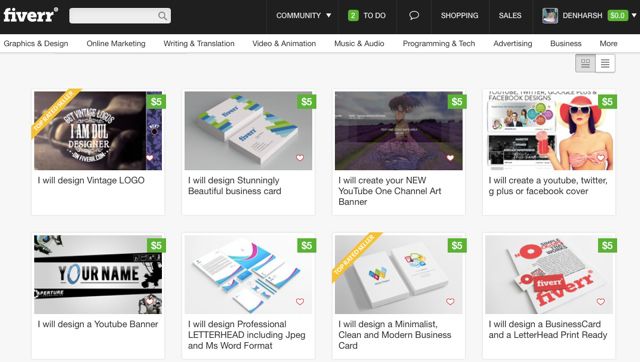
Fiverr launched in 2010 with a disruptive premise: anyone could offer a service (a “gig”) starting at $5. The platform removed friction in freelance hiring by simplifying transactions and standardizing offerings. Over time, Fiverr evolved into a multi-tiered marketplace with professionals offering services from graphic design to SEO to music composition at premium prices.
Fiverr played a central role in democratizing freelance work. By lowering the entry barrier, it enabled millions to earn a living or supplement income without needing extensive networks or traditional resumes. This open marketplace coincided with the broader digital transformation wave that gave rise to remote work and decentralized labor.
However, artificial intelligence introduces a different kind of disruption—one that challenges not just how work is delivered, but who delivers it.
AI’s Disruptive Potential in the Freelance Space
In multiple interviews and public statements, Micha Kaufman has expressed that artificial intelligence is not just a trend—it’s a tidal wave that will impact every profession. According to Kaufman:
“AI isn’t just another tool freelancers can use—it’s a new type of labor altogether.”
The Displacement Dilemma
Some of the most popular categories on Fiverr—such as logo design, content writing, voiceovers, and even programming—are directly threatened by generative artificial intelligence models. Tools like ChatGPT, Midjourney, and DALL·E can create high-quality outputs in minutes, often for free or at very low cost.
This raises a fundamental question: If machines can do the same work faster and cheaper, where does that leave human freelancers?
Kaufman is candid about the risks, stating that freelancers who ignore artificial intelligence or resist it may find themselves obsolete. This warning doesn’t come from a place of fear-mongering, but from an honest assessment of market forces. As he puts it:
“The genie is out of the bottle. Clients will go where they find value, whether that’s a human or a machine.”
The Productivity Promise
While AI threatens to displace some types of jobs, Kaufman also emphasizes its productivity-enhancing capabilities. artificial intelligence can serve as a “co-pilot,” helping freelancers draft content, generate prototypes, analyze data, and even communicate with clients more efficiently.
For freelancers who integrate artificial intelligence into their workflows, the result is often higher output, faster turnaround, and more competitive pricing. This could allow them to take on more clients, diversify their offerings, or improve the quality of their work.
Thus, artificial intelligence is not just a threat—it’s also a powerful tool for those who adapt.
How Fiverr is Responding to AI
Fiverr is not a passive observer in this shift. The company is actively reshaping its platform and strategy to embrace the artificial intelligence revolution.
Introducing AI-Powered Categories
In 2023, Fiverr introduced a dedicated artificial intelligence services category. This includes services like:
- Prompt engineering for image and text generation tools
- AI training dataset preparation
- Custom GPT or LLM fine-tuning
- AI-generated content moderation
- Automation scripts using AI APIs
These offerings reflect Fiverr’s recognition that artificial intelligence-related skills are in high demand—and that freelancers can still profit by operating within the AI ecosystem rather than being replaced by it.
Educating the Freelance Workforce
Fiverr has invested in educational resources to help freelancers upskill and adapt. Through its learning platform, Fiverr Learn, users can take courses on topics like artificial intelligence writing, automation, and generative design.
According to Kaufman, education is the linchpin of resilience. He believes that artificial intelligence will split freelancers into two categories: those who use it as leverage and those who get left behind.
Developing Trust and Transparency Mechanisms
A growing concern among clients is distinguishing between human-created and AI-generated work. Fiverr has started experimenting with features that label AI-assisted content, aiming for transparency without penalizing users who leverage these tools.
By setting expectations clearly, Fiverr hopes to build trust between buyers and sellers in a world where the line between human and machine work is increasingly blurred.
AI as a Meritocratic Equalizer
One of Kaufman’s most optimistic views about artificial intelligence is its potential to level the playing field. In traditional economies, factors such as geography, accent, or educational background often act as barriers. AI tools can help overcome these, allowing talented individuals from underserved regions to deliver services that meet global standards.
For instance:
- A non-native English speaker can use artificial intelligence to proofread and polish writing.
- A beginner designer can use artificial intelligence tools to generate layout ideas or modify templates.
- An entry-level coder can use artificial intelligence to debug and refactor scripts faster.
Kaufman argues that AI reduces the importance of legacy advantages and puts the emphasis back on creativity, strategy, and innovation. In other words, artificial intelligence makes the gig economy more accessible than ever.
Economic Impact: The Two-Speed Freelance Market
Despite AI’s benefits, not all freelancers will benefit equally. Kaufman foresees a two-speed freelance economy:
Low-Skill, High-Volume Workers at Risk
Freelancers who provide basic, repetitive services are most vulnerable. These tasks are easily replicable by artificial intelligence and often do not require a deep understanding of nuance or context.
Examples include:
- Basic data entry
- Simple transcription
- Standard article generation
- Clipart-style logo design
These categories are already seeing price compression and demand decline.
High-Skill, Value-Added Workers Will Thrive
Freelancers who combine domain expertise, emotional intelligence, and creative judgment will remain in demand. artificial intelligence can augment their work, but not replace it.
Examples include:
- Branding consultants
- UX designers with research capabilities
- Marketing strategists
- Legal tech freelancers
- Niche software developers
For these professionals, artificial intelligence is a productivity multiplier rather than a competitor.
The Psychological Toll of the AI Revolution
Beyond economics, Kaufman also speaks about the emotional and psychological toll that AI can exert on the freelance workforce.
Many freelancers already face uncertainty, isolation, and pressure to stay relevant. The pace at which AI is evolving can lead to anxiety, burnout, and existential questions about self-worth and employability.
To address this, Fiverr is exploring community-driven support models, mental health resources, and more open conversations about the emotional reality of freelance life in the age of AI.

AI and the Redefinition of Creativity
Another profound observation Kaufman shares is how artificial intelligence is redefining what it means to be creative. Traditionally, creativity has been seen as an exclusively human trait—driven by emotion, experience, and intuition.
artificial intelligence tools are now generating poetry, art, music, and stories that rival human output. This forces a reevaluation: is creativity the process or the product?
Kaufman believes that the future of creativity lies in collaboration, where humans provide the emotion, context, and vision, while artificial intelligence handles execution, variation, and scale. The most successful creatives will be those who can orchestrate machines toward meaningful goals.
What This Means for the Future of Work
Fiverr’s CEO does not predict a world where artificial intelligence replaces all workers. Instead, he envisions a hybrid future where:
- Freelancers offer “AI plus human” services
- Platforms facilitate transparency, trust, and education
- Clients learn to value strategy over simple execution
- Work is judged by outcomes, not process
In this future, adaptability will be the most valuable skill. Kaufman urges all professionals—freelancers or not—to stop thinking about artificial intelligence as a threat and start thinking about it as the next operating system of the labor market.
FAQs
Why does Fiverr’s CEO say AI is “coming for everyone”?
Micha Kaufman highlights that AI is affecting all industries by automating routine tasks and changing the expectations of service delivery. His statement is a wake-up call to prepare for massive shifts in how work is done.
How is Fiverr adapting to the rise of AI?
Fiverr has added new artificial intelligence service categories, launched educational resources, and is working on transparency features to help buyers understand when AI is used in delivering services.
Will AI replace all freelance jobs?
Not all. Basic, repetitive jobs are at higher risk, but freelancers who offer creativity, strategy, and high-value services can thrive by incorporating artificial intelligence into their workflows.
Can beginners still find success on Fiverr in the age of AI?
Yes, especially if they learn to use AI tools effectively. Artificial intelligence can help level the playing field and assist with quality, speed, and client communication.
What skills will be most valuable for freelancers in an AI-driven world?
Skills like strategic thinking, emotional intelligence, prompt engineering, creative direction, and niche expertise will become increasingly valuable.
Conclusion
When Fiverr’s CEO says “Artificial intelligence is coming for everyone,” he does not mean it in a dystopian, Terminator-style way. Rather, he’s emphasizing that no profession is immune to change. The rise of AI is as significant as the industrial revolution or the internet—and it requires similar recalibration.
